Maison & Objet 2025 trends in textiles and decorative objects
Maison & Objet 2025: Top Trends in Textiles and Decorative Objects captures the mood of the January edition, held at Porte de Versailles in Paris from 17 to 21 January. The “Make Your Interior” programme connected furniture, crafts and decorative arts with a renewed interest in personal, tactile rooms. Across the stands, designers favoured materials that invited touch, forms inspired by nature and colours that brought warmth to neutral settings.
Luxury was increasingly expressed through texture rather than decoration alone. Washed linen, nubby bouclé, wool, cork, stone, timber and imperfect ceramics offered visual depth without demanding a perfectly matched interior. At the same time, deep reds, blues and greens provided vivid counterpoints, showing that restraint and expression could coexist rather than compete.
These shifts are particularly relevant in Australia, where compact Sydney and Melbourne apartments often need every textile and object to work harder. Summer light in Brisbane can be intense, Sydney’s humidity affects natural fibres and coastal salt air can be punishing to untreated metal. The most useful Parisian ideas will therefore be those adapted to local conditions, not simply reproduced from showroom photographs.
The local market also shapes how these designs reach buyers. Furniture and accessories commonly appear through independent studios, established retailers and import distributors, with GST, freight and extended lead times affecting final pricing. Buyers should check applicable Australian Standards, including AS/NZS 1534.3 for upholstered seating, while imported timber objects may need biosecurity documentation. Clear fibre-content and care information is equally valuable.
| Design direction |
Textiles |
Decorative objects |
Australian consideration |
| Tactile naturalism |
Washed linen, wool, bouclé and textured blends |
Stoneware, cork and unfinished timber |
Select washable or easily replaceable finishes |
| Mineral colour |
Chalk, clay, sand, moss and muted blue |
Glazed ceramics and patinated metals |
Pair with brighter accents in smaller rooms |
| Biomorphic geometry |
Organic lines and softly irregular patterns |
Rounded vessels, pebble forms and branching lights |
Allow curved pieces to balance straight architectural lines |
| Crafted irregularity |
Visible weave, embroidery and hand-drawn detail |
Marked pottery, carved wood and assembled forms |
Accept variation while checking durability |
| Adaptive utility |
Removable covers and dual-use textiles |
Convertible lamps, modular storage and multifunctional trays |
Prioritise pieces that serve several daily needs |
A tactile shift away from perfect surfaces
Textiles at Maison & Objet increasingly resembled materials found in nature rather than factory-made perfection. Fine yarns, irregular weaves and washed finishes created depth that changed with the light, while bouclé and softly brushed wool made upholstery and curtains feel immediately welcoming. This tactile direction suits Australian preferences for interiors that look comfortable in use rather than protected from life.
Decorative objects followed the same logic. Unglazed pottery displayed tool marks and uneven glazes, while carved timber, moulded plaster and brushed metal retained evidence of their making. The result was more varied than the polished minimalism seen in earlier design cycles. A vessel or stool could provide visual interest through its surface alone, reducing the need for excess styling.
The pop-up format examined in the pop-up offers a useful parallel: temporary displays benefit from materials and objects that create an immediate atmosphere. In an Australian pop-up showroom, tactile upholstery and handmade ceramics can make a short visit feel more engaging. Such spaces also allow customers to judge texture and scale before committing to a full installation.
Climate remains the practical test. Melbourne’s rapid changes in temperature reward layered textiles, while Sydney homes need robust performance fabrics in bright, humid rooms. In Brisbane, UV exposure can fade colours and weaken some fibres, making sample testing and specialist finishes essential. Natural materials still work, but their maintenance regime should be understood before they enter a busy household.
Colour, pattern and shape find a softer edge
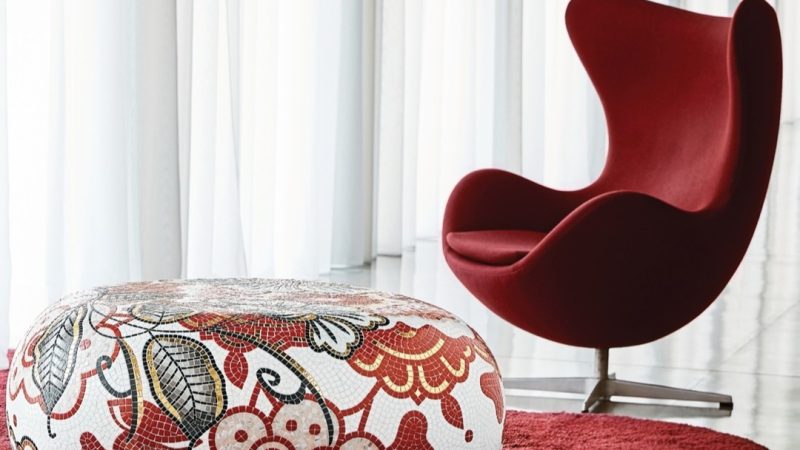
The palette at the fair combined mineral neutrals with confident colour. Chalk, oatmeal, clay, moss and soft blue provided a calm foundation, while burgundy, ochre, ink and coral appeared in small but decisive doses. Rather than one prescribed scheme, the most compelling rooms paired a restrained base with one saturated element, such as a deep-toned chair, patterned curtain or brightly glazed lamp.
Pattern also became less formal. Botanical silhouettes, fragmented checks, irregular stripes, embroidered florals and large-scale graphics appeared beside quieter woven textures. Decorative forms followed suit, shifting from severe geometry towards pebbles, leaves, shells and softly folded shapes. These references felt recognisable without becoming overly literal, an important distinction for interiors that must retain a contemporary character.
Independent practices such as Poësy Féeline’s studio demonstrate how personal narrative can give texture and form a stronger role in decorative design. This smaller-scale approach is especially relevant to Australian buyers, where supporting local makers can produce objects suited to regional architecture and daily routines. A bespoke vessel or woven panel may also use less material than a large installation while delivering more visual impact.
The new decorative object has everyday utility
Decorative design was moving away from objects that existed only to be looked at. Vases became useful containers, trays gained handles, stools doubled as side tables and lighting pieces were designed to move between rooms. This combination of function and expression answered a practical concern: in compact urban homes, an object should earn its footprint several times over.
Textiles contributed to the same adaptable approach. Removable covers allowed an upholstery piece to change with a season, while throws, runners and curtain panels could create new relationships within a room. Designers also explored reversible surfaces and interchangeable components, anticipating homes where furniture is relocated, re-coloured or repurposed rather than kept in a fixed arrangement.
Australian conditions broaden the meaning of usefulness. Decorative lighting for a balcony needs careful outdoor certification, while textiles near windows require UV and colourfastness testing. Stoneware suited to the dining room may not tolerate a shaded garden; conversely, an object made for indoor display should not be mistaken for a weather-resistant garden piece. Makers should state intended use clearly, particularly for glazed ceramics, timber and natural fibres.
The result is a less rigid division between furniture, accessories and art. A sculptural lamp can anchor a reading corner, a textured stool can support a plant and an expressive vessel can hold fruit without becoming static. These hybrid roles allow the strongest Maison & Objet ideas to function comfortably in everyday Australian spaces.
A practical buying filter for Australian homes
A Parisian trend should survive scrutiny beyond its visual appeal. Before ordering, it should handle Australian light, climate, family routines and the available delivery window. The following checks can narrow a large international edit into a collection that remains practical after the showroom excitement has passed.
- Prioritise removable covers, washable fibres and replaceable components, especially for homes with children, pets or frequent entertaining.
- Match each material to its location by testing for sunlight, humidity, salt exposure and daily wear rather than relying on appearance alone.
- Verify compliance, provenance and documentation, including Australian Standards for upholstered seating, biosecurity treatment for timber and accurate fibre-content information.
- Buy versatile pieces gradually, using the dimensions of the actual room and a realistic furniture budget rather than allowing import lead times to dictate the order.
This filter also supports a slower, more valuable approach to buying. A chair that offers several uses, a curtain with replaceable fabric or a lamp with standard fittings is more likely to remain relevant than a highly specific statement piece. Local delivery schedules and the availability of replacement parts should be considered alongside the design itself, while familiar sizing helps avoid costly returns.
Make the Paris edit work Down Under
Maison & Objet 2025 offered a design language based on touch, natural references and useful flexibility, but its strongest effect should be editorial rather than literal. Australian interiors already have distinctive conditions: pale coastal houses, darker timber homes, compact city apartments and generous verandas. Those settings can absorb tactile colour and crafted objects more effectively when the selection responds to the architecture and the way people actually live.
Local retailers, makers and showrooms provide the practical bridge between the Paris presentation and an Australian purchase. Visitors can handle upholstery, compare ceramic glazes and check how a patterned textile behaves under local daylight. The edit becomes more personal by combining international references with pieces made for regional climates, relaxed habits and Australian homes.
Save the strongest references from the January show, shortlist a manageable group of textiles and decorative objects, and build a buying plan around local suppliers and realistic delivery dates. Visit showrooms, request samples and check every specification before ordering, then allow the final collection to feel distinctly Australian.