Moroso’s New Armchair Uses Recycled Ocean Plastic Fiber
Moroso’s latest armchair brings an environmental material story into a category usually associated with generous upholstery, sculptural form and long-term comfort. Its use of recycled ocean plastic fiber connects Italian furniture design with a growing effort to recover discarded plastic and turn it into a usable textile resource.
The idea is simple in appearance but complex in practice. Plastic collected from marine environments, beaches and coastal waste streams must be sorted, cleaned and processed before it can become a consistent fibre. In the armchair, that recovered material contributes to the covering or textile composition rather than serving as a visual gimmick.
This approach reflects a wider shift in the international furniture industry. Designers and manufacturers are examining the origin of fibres, the distance materials travel, the chemicals used during finishing and what happens when a product reaches the end of its useful life. Upholstered seating is an especially important area because fabric, foam, timber and metal are often combined in ways that make separation difficult.
For Australian interiors, the launch is relevant beyond its ecological message. Buyers in Sydney and Melbourne are increasingly comparing imported furniture through material disclosures, durability and repair options. The armchair also suits the local preference for adaptable pieces that can work in a compact apartment, a generous suburban living room or a carefully planned hospitality setting.
From Marine Waste To Furniture Fibre
Recycled ocean plastic fibre is generally made from plastic waste recovered from coastlines, waterways or marine environments. After collection, the material is sorted by polymer type, cleaned and converted into flakes or pellets. These are melted and extruded into filaments that can be spun into yarn, woven, knitted or blended with other fibres.
The process gives a second life to material that might otherwise remain in the environment or enter a landfill. It also reduces reliance on virgin petroleum-based polyester, although it does not make the finished textile biodegradable. The fibre remains a synthetic polymer, so responsible disposal and future recycling continue to matter.
For a seating product, performance is as important as provenance. A fabric must tolerate abrasion from repeated use, resist fading and maintain its handle after cleaning. These demands are particularly relevant in Australia, where bright sunlight through north-facing windows can be intense and open-plan homes often place furniture close to glazed doors.
The exact environmental value depends on the full specification. Recycled content percentage, the source of the recovered plastic, dyeing methods, backing materials and the presence of foam all influence the armchair’s footprint. A transparent product sheet is therefore more useful than a broad claim that simply describes a piece as sustainable.
Moroso’s Material-Led Design Language
Moroso has built its reputation around expressive furniture developed with internationally recognised designers. Its seating collections often treat an armchair as a small architectural object, using unusual proportions, colour and texture to establish a strong presence within a room.
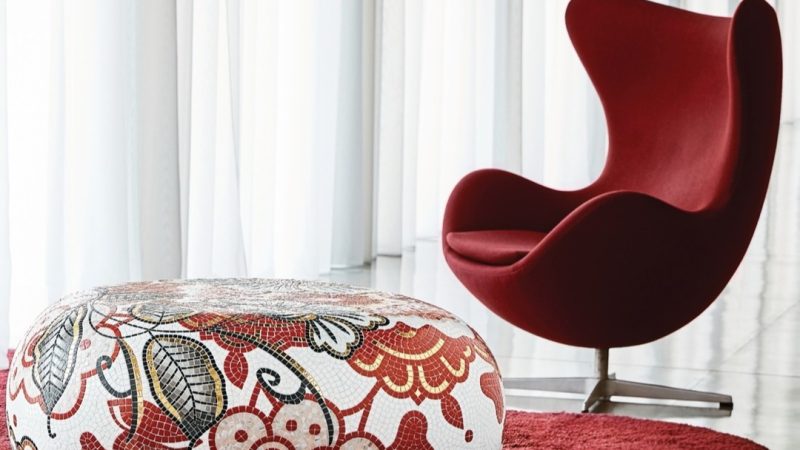
The new design continues that tradition while giving the upholstery a more visible material role. Recycled ocean plastic fibre can provide a restrained, tactile finish that allows the silhouette to remain the focus. Depending on the weave and colour, the surface may appear softly mottled, finely tailored or subtly irregular, giving the chair visual depth without requiring a loud pattern.
This is a useful direction for contemporary interiors. Sustainable furniture does not need to look rustic, unfinished or overtly technical. A refined armchair made with recovered fibre can sit comfortably beside marble, timber, brushed metal and Australian hardwoods. It can also introduce a quieter contrast in rooms dominated by polished surfaces.
The design is likely to appeal to customers who want a statement chair without committing to an entire matching suite. An individual armchair can define a reading corner, soften a minimalist living area or create a more residential atmosphere in a boutique hotel, gallery or workplace lounge.
Comfort, Care And Everyday Use
The success of an upholstered armchair is measured through daily contact. Seat depth, back support, arm height and cushion resilience determine whether a design remains attractive after the first impression. Recycled fibre can contribute to a durable cover, but comfort still depends on the internal construction and the quality of the foam, webbing or springs beneath it.
Care instructions deserve close attention before purchase. Many high-end upholstery textiles benefit from regular vacuuming with a suitable attachment, prompt treatment of spills and protection from prolonged direct sunlight. Australian households may also need to consider sand, dust and pet hair, particularly in coastal suburbs and homes that open directly onto courtyards or balconies.
The chair is intended for indoor use unless the manufacturer specifically approves the fabric and structure for outdoor exposure. Australia’s outdoor living culture can encourage furniture to move between a living room, covered terrace and alfresco area, yet salt air, humidity, rain and ultraviolet radiation can quickly damage materials designed for interiors.
Imported furniture also brings practical considerations for the local market. Customers should check lead times, delivery access and after-sales support, especially when ordering a large upholstered piece for an apartment in inner Melbourne, Sydney or Brisbane. Replacement covers, repair services and access to fabric samples can make a substantial difference over the armchair’s life.
A More Careful Definition Of Sustainable Seating
The armchair’s recovered ocean plastic fibre is a positive material decision, but sustainability needs to be assessed across the entire product. A long-lasting chair that can be repaired may have a better practical outcome than a cheaper item that is replaced after a few years, even when the cheaper product contains a small amount of recycled material.
Construction affects this equation. Joinery that can be accessed, replaceable upholstery and separable components support repair and eventual recycling. Adhesives, laminated composites and permanently bonded layers can make those processes harder. Buyers, specifiers and retailers benefit from asking for information about the frame, padding, fabric composition and disassembly process.
There is also a communication responsibility. Under Australian Consumer Law, environmental representations must be accurate and supported by evidence. Claims referring to ocean recovery, recycled content or reduced impact should explain what has been measured and which part of the armchair the claim covers. The Australian Competition and Consumer Commission has increased attention on misleading environmental marketing, making precise product language important for brands and retailers.
For commercial projects, designers may also look at Green Star documentation, supplier declarations and material transparency. A recycled textile can support a broader responsible procurement strategy, yet it should be considered alongside durability, indoor air quality, cleaning requirements and the project’s end-of-life plan. The strongest specification is based on several verified attributes rather than a single appealing phrase.
How It Compares With Common Upholstery Choices
The recycled ocean plastic fibre places Moroso’s armchair within a broader group of material options. Each textile has advantages, and the right choice depends on the intended setting, maintenance routine, appearance and the manufacturer’s detailed specification.
| Upholstery option |
Main advantage |
Key limitation |
Suitable Australian setting |
| Recycled ocean plastic fibre |
Gives recovered plastic a new use and can deliver durable, refined upholstery |
Remains a synthetic material and may be difficult to recycle when bonded to other layers |
Apartments, living rooms, hospitality lounges and workplaces |
| Virgin polyester |
Consistent performance, colour range and relatively accessible pricing |
Relies on new fossil-based feedstock |
High-use interiors where budget and stain resistance lead the decision |
| Wool |
Natural hand, thermal comfort and strong design heritage |
Can require careful cleaning and may cost more |
Cooler southern homes, premium residential interiors and boutique hotels |
| Linen or cotton blend |
Soft, breathable appearance with a relaxed texture |
May crease, mark or wear faster depending on construction |
Decorative seating and lower-abrasion living spaces |
| Leather |
Long service life and potential for repair or reconditioning |
Resource-intensive production and sensitivity to heat or direct sun |
Formal living rooms, clubs and commercial spaces requiring robust surfaces |
| Recycled polyester from post-consumer bottles |
Diverts existing plastic waste from disposal and offers broad textile versatility |
Feedstock may come from land sources rather than marine recovery |
Mainstream residential and commercial furniture collections |
For Australian homes, a performance textile with recycled content can be a sensible balance between appearance and practicality. A Melbourne apartment may benefit from a compact chair that withstands frequent use, while a coastal property in Perth or the Gold Coast may need a stronger plan for sun exposure and salt-laden air.
The key distinction is between a material story and a complete product strategy. Ocean-recovered plastic can add value when paired with durable construction, responsible manufacturing and realistic care instructions. It becomes less persuasive when the material is used to distract from poor longevity or a chair that cannot be repaired.
Moroso’s new armchair shows how environmental thinking can enter luxury furniture without abandoning character or comfort. Its recycled ocean plastic fibre gives the design a direct connection to coastal waste recovery, while its success will ultimately depend on the quality of the construction, the clarity of the information and the years of use it provides.
For designers, retailers and homeowners, the piece is an invitation to look more closely at upholstery specifications and ask where materials come from, how they perform and what can happen to them later. Explore the full Moroso collection through an authorised Australian showroom, request the material documentation and experience the armchair in person before selecting it for a residential or commercial interior.