NeoCon 2025: Contract textiles reshaping acoustic panels
Australian commercial interiors are paying closer attention to sound. Across Sydney's new towers, Melbourne's revitalised hospitality venues, and Brisbane's education precincts, the conversation has moved well beyond simple background-noise reduction. Specifiers now treat acoustic performance as a primary brief item, on the same level as lighting and air quality. The fabrics wrapping acoustic panels have become the focal point of that conversation.
Where once a panel was hidden behind perforated metal or generic polyester, today the textile defines the room. It carries the colour palette, signals the brand, and quietly absorbs the chatter of an open-plan workplace. At the same time, the acoustic substrate underneath has grown more sophisticated, allowing thinner, lighter panels that designers are happy to leave exposed.
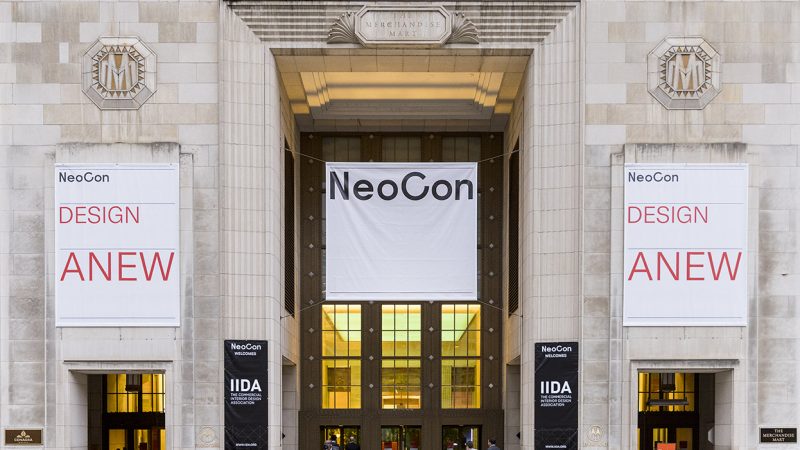
NeoCon, held each June at the Mart in Chicago, remains the global stage where contract-grade textiles for these applications are unveiled. The 2025 edition introduced collections from Carnegie, Designtex, Maharam, Knoll Textiles, and a handful of European mills, each tuned to the post-pandemic workplace and the acoustic demands that come with it.
For Australian buyers, distributors, and interior architects, several threads are worth pulling on. The following sections look at performance benchmarks, sustainability credentials, aesthetic direction, and how each of these threads intersects with local standards and project briefs.
Performance fabrics move beyond the NRC rating
The Noise Reduction Coefficient has long been the headline number for any acoustic textile, but at NeoCon 2025 several manufacturers pushed beyond a single rating. Carnegie's expanded Xorel range now publishes absorption data across low, mid, and high frequencies, acknowledging that speech intelligibility in a Melbourne co-working lounge and rumble in a Sydney auditorium are different problems entirely.
Maharam introduced a woven textile with a built-in scrim layer that boosts mid-range absorption without doubling the panel thickness. The mill claims an NRC of 0.85 in a 25mm construction, which is a meaningful gain for slim ceiling baffles where Australian fit-out budgets rarely allow deep bulkheads.
Designtex, meanwhile, showed a recycled-polyester weave tested against both ASTM C423 and ISO 354, two standards Australian acoustic consultants often request when verifying imported product. The dual certification matters because local laboratories more commonly quote ISO results, while North American manufacturers still default to ASTM numbers.
The table below compares five of the most discussed contract textile ranges from the show, including their published performance, recycled content, and a typical project application.
| Manufacturer |
Collection |
NRC (25mm panel) |
Recycled content |
Best fit |
| Carnegie |
Xorel Biobased |
0.75 |
33% plant-based |
Healthcare, education |
| Maharam |
Reverb |
0.85 |
100% post-consumer |
Workplaces, lobbies |
| Designtex |
Acoustic Weave 2 |
0.80 |
78% recycled |
Hospitality, libraries |
| Knoll Textiles |
Hourglass |
0.70 |
50% recycled |
Theatres, auditoria |
| Luna Textiles |
Quiet Form |
0.90 |
100% recycled |
High-end corporate |
The shift from single-figure summaries to frequency-specific data is the most important development for Australian specifiers. It allows acoustic consultants to model how a fabric will perform in a particular room rather than rely on a generic absorption class. For projects such as Brisbane's Cross River Rail stations or new university learning hubs, that modelling capability now directly shapes fabric selection.
Sustainability as a specification driver
Green Star-rated fit-outs in Australia have made recycled content a routine specification requirement. Most major corporates in the Sydney CBD and the new Melbourne headquarters of the big four banks now demand a minimum of 50% recycled content in any textile that ships on the project. NeoCon 2025 responded with collections hitting 78%, 100% post-consumer, and even fully biobased lines.
Carnegie's Xorel Biobased stands out for using yarns derived from sugarcane ethanol rather than petroleum. The mill reports a 50% reduction in embodied carbon compared with conventional solution-dyed polyester, and the fabric retains the same abrasion ratings that made the original Xorel a workhorse for high-traffic commercial interiors. Australian projects targeting a 5-Star Green Star rating can use the biobased variant without compromising durability.
Knoll Textiles' Hourglass range, already known for its distinctive cell-like structure, has been re-engineered with a recycled polyester face and a biobased foam backing. The acoustic panel format is supplied through Knoll's local distributor in Sydney, which simplifies lead times for the east coast market.
Maharam's Reverb uses a closed-loop recycled yarn sourced from textile-to-textile recovery programmes. While Australian infrastructure for textile recycling remains limited, several design firms in Melbourne are now partnering with manufacturers to bring take-back schemes into local projects, a step that should accelerate as more corporate clients commit to circular procurement.
Texture, colour and the sensory workplace
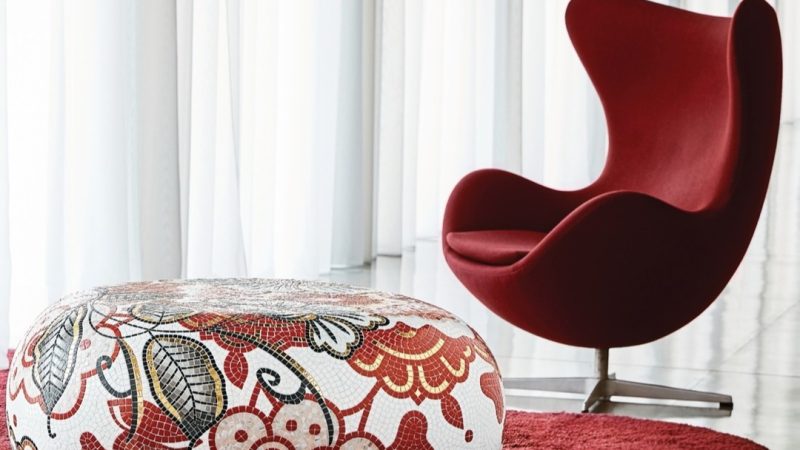
Acoustic panels used to be flat, monochrome, and visually forgettable. NeoCon 2025 made clear that the new contract textile is anything but. Pleated weaves, three-dimensional quilting, and large-scale bouclés are now being used to bring tactility to ceilings and walls that were once plain drywall.
Colour direction leaned into warm neutrals and earthy mid-tones, reflecting a broader move away from the cool greys of the late 2010s. Designers at the show spoke repeatedly about biophilic intent, with palettes inspired by Australian sandstone, eucalypt, and the ochres of the outback. Luna Textiles' Quiet Form range launched in three earth-driven colourways that translate well to coastal hotel lobbies from the Gold Coast to Broome.
Maharam's Reverb includes a bouclé finish reminiscent of raw wool, which suits the softer interiors favoured in Australian residential aged care. Several aged-care providers in Adelaide and Perth have begun specifying acoustic panels wrapped in this kind of textile to soften the clinical feel of common areas without sacrificing performance.
Three-dimensional surfaces also bring an acoustic benefit beyond what the NRC rating suggests. A pleated or bouclé face increases the effective surface area of a panel, scattering sound more effectively than a flat weave. Designers working on collaborative learning spaces in regional New South Wales and Victoria are now treating texture as both an aesthetic and acoustic tool.
Australian applications and project types
Sydney's commercial fit-out market remains the largest single destination for high-end contract textiles. The wave of new co-working operators opening in the CBD and Surry Hills has created steady demand for acoustic panels that perform at NRC 0.80 or higher while also signalling brand identity through colour and weave.
Melbourne's hospitality sector, recovering from several quieter years, has rediscovered the acoustic panel as a design device. New bars and restaurants in the laneway precincts around Flinders Lane and Smith Street are using textile-wrapped panels to soften hard surfaces and create intimacy without lowering ceilings, a common constraint in heritage buildings.
Brisbane and Perth are seeing growth in education and healthcare applications. The Queensland government's investment in new schools includes acoustic targets above the minimum NCC requirement, which favours higher-performance fabrics. Aged-care rollouts in Western Australia, meanwhile, are pushing demand for warm, residential-feeling textiles that still meet healthcare cleaning protocols.
Even regional centres are now specifying NeoCon-level textiles, particularly as remote-work hubs emerge in places like Newcastle, Geelong, and Cairns. Local distributors have responded by holding small stockholdings of the most popular ranges, which has reduced the previous reliance on long international lead times.
Compliance with Australian acoustic standards
Australia uses the National Construction Code, with Section F5 covering sound transmission and insulation in commercial buildings. For acoustic panels specifically, the relevant performance is typically verified against AS/NZS ISO 717, which rates airborne sound insulation. Textile suppliers need to demonstrate that their products have been independently tested under recognised protocols.
Several NeoCon 2025 launches now carry dual ASTM and ISO test reports, a useful change for Australian acoustic consultants who previously had to request supplementary testing. Designers should still confirm that the test applies to the panel configuration they intend to use, since a fabric rated at NRC 0.85 over a 50mm panel will perform differently when wrapped over a 25mm substrate.
For healthcare and education projects, additional standards apply, including the NSW Health Infrastructure acoustic guidelines and the Victorian Department of Education's audio performance standards. Specifiers should ask manufacturers for project-specific test data rather than relying solely on catalogue figures, particularly when a panel will be installed in a reverberant space such as a hospital atrium or a school hall.
It is also worth checking that any fire-rating claims align with the NCC's Deemed-to-Satisfy provisions. Most contract textiles shown at NeoCon already carry AS 1530.3 results, but the spread of new biobased finishes means fire performance should be verified for each specific colourway, as dye chemistry can influence results.
Australian buyers heading into the next specification cycle can use the NeoCon 2025 cohort as a starting point, but the real work happens back home, matching fabric performance to NCC requirements, project briefs, and the realities of local installation. For related reading on how design exhibitions shape commercial practice, the documenta exhibition is worth a closer look, since it shows how textile-led installations inform mainstream commercial work. Specifiers should request physical samples, verify test reports against the NCC and AS/NZS ISO 717, and speak with Australian distributors about local stockholdings before locking in a range for the next project.