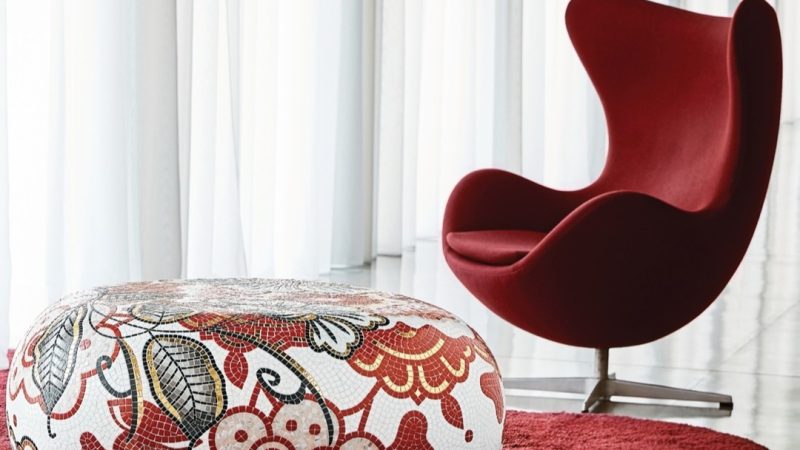
Marble inlay and the modern Australian tabletop
The art of marble inlay in contemporary tabletop designs turns a practical surface into a study in line, colour and craftsmanship. Rather than laying one slab across a table, an inlay composition assembles carefully shaped pieces of stone into a deliberate image. The result may be geometric, botanical or abstract, with every junction planned as part of the whole. What once read as decorative marquetry now feels architectural: a small, durable landscape drawn in stone.
In Australia, that visual language fits the way many homes are lived in. Open-plan kitchens, informal family rooms and covered outdoor dining areas often place furniture where it can be seen from several angles, so a table becomes a focal point rather than a forgotten utility. Strong daylight, coastal palettes and warm timber also create useful counterpoints for cool stone. For buyers, marble is increasingly part of the everyday setting, not simply a formal centrepiece.
The craft depends on restraint as much as spectacle. A successful composition has a clear grain of movement, a controlled palette and edges that make the piece feel resolved. Its beauty comes from the way separate fragments become one surface, yet that unity must survive handling, cleaning and years of use. This makes marble inlay as relevant to everyday Australian homes as it is to collectible design.
From solid slab to layered composition
Marble begins as a quarried block that is sliced into slabs. Each slab reveals its own network of veins, clouds or fractures, and a maker may select adjacent sections so the pattern continues from one piece to the next. Narrow strips can be cut from offcuts, then arranged by hand or with a jig. Even a simple border may require dozens of individually shaped components.
The design is usually built at full scale rather than drawn at table size. Templates transfer the geometry of the top to every fragment, while photographs and vein references preserve the intended direction of the stone. Some makers deliberately introduce a discontinuity, allowing a vein to stop at a seam; others align it so precisely that the eye reads the surface as a continuous field.
Contemporary producers have broadened the visual vocabulary of this traditional craft. Beside symmetrical medallions and classical borders, viewers now encounter offset grids, broken arcs and pixel-like arrangements. The same shift appears across product launches and design events featured by Tony Cucco’s design coverage.
Why inlay speaks to contemporary design
Inlay occupies an appealing middle ground between handcraft and digital fabrication. Traditional stonecutters still shape, refine and fit pieces by hand, while CAD models, waterjets and CNC routers make complex geometry repeatable. The contrast gives contemporary work a particular tension: exact lines can contain irregular mineral patterns, and machine-cut edges can meet a softly honed surface without looking sterile.
The strongest examples avoid treating contrast as an exercise in clash alone. A pale stone may be paired with charcoal, deep green or rust, while a single vivid fragment becomes the accent. This restraint reflects wider shifts in interiors toward collected materials, visible repair and layered history. It also gives designers room to make a small table feel sculptural without making it feel overworked.
For commercial spaces, the technique offers branding with a physical logic. A café counter, reception desk or communal dining table can carry a motif that belongs to the venue, yet remain hard-wearing enough for daily contact. In Australian hospitality, where tables often move between shaded dining rooms and sunlit terraces, that durability matters as much as visual impact.
Choosing the stone and visual direction
A successful inlay starts with the block, not the drawing board. Colour, vein density, translucency and finishing options determine whether a pattern will feel lively or quiet. Fine-veined marble can support a precise graphic composition; strongly figured stone may need larger shapes and fewer interruptions. Some designers use one family of marble, relying on grain and direction, while others choose contrasting stones to clarify the geometry.
Scale changes everything. A narrow band that looks convincing on a side table may become restless across a long dining top, while a single dramatic vein can settle an expansive surface. Designers need to consider where the piece will sit, how sunlight travels across it through the day and whether it will be viewed mainly from above or at seated height. Australian buyers at stone yards in Melbourne, Sydney and Brisbane commonly compare imported slabs with Australian material, including options from Tasmania, so selection is a practical conversation as well as an aesthetic one.
Colour should also answer to the room rather than overpower it. Warm white marble can bridge limestone floors, pale oak and brushed metal, while darker stone gives a compact table visual weight. In a coastal interior, blue-grey movement may sit easily beside sand, timber and linen. In an apartment, a restrained composition can bring richness without closing down the space.
Precision, handwork and the making process
Designers generally develop the composition as a full-size drawing or digital model before any stone is cut. The tabletop dimensions, edge profile and support system are fixed early, because each decision affects the pattern. Full-size templates are then placed on selected slabs, and the fragments are cut, labelled and dry-fitted. That trial assembly allows the maker to correct gaps, balance colour and confirm the flow of the design before adhesive reaches the surface.
Digital cutting accelerates the process, but it does not remove judgement. The maker must account for the natural variation inside each block, choose the direction of every vein and inspect cut edges for small chips. Some components are machined, while bevels, recesses and surface transitions may still be refined by hand. In a fine marquetry piece, the fit can be so close that the joint reads as a drawn line once the surface is ground and polished.
The substrate is just as important as the face. Marble needs a stable, level base with sufficient support across the entire top; otherwise the brittle material can crack around openings or long unsupported spans. Movement joints, fixings and edge details must be coordinated with the inlay pattern. For a large table, the understructure may be engineered in metal or timber and made accessible for future servicing. A reputable maker should be able to explain every layer rather than treating the top as a decorative skin.
Inlay across Australian interiors
The most convincing domestic examples use the technique as architecture in miniature. A dining table might carry the geometry of a courtyard, while a console repeats the angles of a window frame or the arcs of a verandah. This correspondence makes an inlay feel purpose-built and gives a room a genuine showstopper without turning the stone into the whole scheme. Australian makers such as Kifl Mally furniture demonstrate how sculptural stone can work as a distinctive centrepiece within a considered room.
Hospitality interiors offer another useful test. Here, a bold top must tolerate crowded service, luggage, spills and constant movement without losing its refinement. In many Australian cafés and restaurants, a durable marble surface also helps connect the venue’s fitout with its menu, signage or local story. The same surface may need to meet accessibility requirements, withstand commercial cleaning and still provide an inviting place for a long lunch.
Outdoor rooms need a more cautious approach. In Australian parlance, the alfresco area is often part of the everyday home, so marble can live beautifully under cover. Exposed tables, however, face rain, heat and UV exposure. Sealants, adhesives and finishes should be selected for the location rather than copied from an indoor project. Even under cover, drainage and stable footing matter, and a stone supplier familiar with Australian conditions can advise where a table can safely remain outside through summer.
Select and live with an inlay tabletop
Before ordering, ask to see the actual stone or a representative sample in the room’s light. Confirm the tabletop dimensions, edge, finish, substrate, delivery route and expected lead time. A maker who can discuss these details should also provide photographs of the assembled surface, a care guide and clear terms for repairs.
A few practical choices protect both appearance and longevity:
- View the piece in daylight and under the artificial lighting used in the room, especially if the marble has a strong vein or polished finish.
- Request details about the sealer or surface treatment, including maintenance products and any conditions that affect the warranty.
- Check that the edge, joints and base are engineered for the table’s size, weight and intended level of daily use.
- Arrange specialist delivery and installation; marble tops should be lifted, supported and protected rather than treated as ordinary furniture.
For everyday care, use a soft cloth and a neutral, pH-balanced cleaner, and wipe acidic spills promptly. Coasters, placemats and felt pads reduce the risk of rings, scratches and heat marks. Do not assume every marble needs the same sealer, and avoid DIY solvents or abrasive pads. Outdoor pieces should be covered when not in use, particularly through the hottest and wettest parts of the Australian year.
To begin, take a photograph of the room, note where the table will sit and visit a stone showroom with the maker. Collect a daylight sample, compare it with the existing palette and commission a design based on the actual proportions of the space. That measured process can turn a dramatic idea into an enduring piece for everyday living.