The Psychology Of Circular Rooms For Conversation And Calm
A circular room changes the way people move, sit, look, and listen. Without a dominant corner or a rigid front-facing axis, the space encourages awareness of everyone present. Its geometry can make a dining room feel more intimate, a lounge more sociable, and a reading area more sheltered from the activity beyond it.
The appeal is both emotional and practical. Curved walls soften visual boundaries, while round tables and circular seating arrangements reduce hierarchy. At the same time, a well-designed arc can improve circulation, distribute daylight, and create a calmer relationship between furniture and architecture.
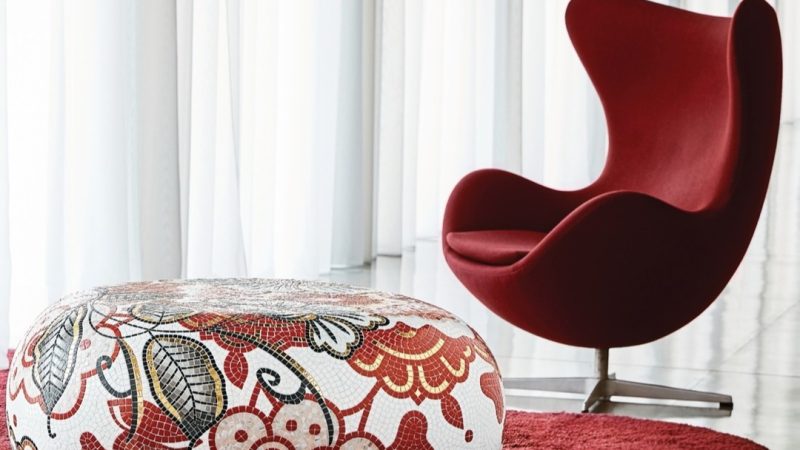
This is why curved interiors have appeared across contemporary hospitality, residential, and workplace design. From sculptural sofas shown at international furniture fairs to rounded rooms in boutique hotels and cultural buildings, the shape has moved beyond a decorative trend. It is becoming a tool for shaping human behavior.
Why Curves Change Social Behavior
Rectangular rooms often establish an unspoken order. A long table can create a head position, a sofa may face a screen, and a central corridor can divide people into separate zones. These arrangements are useful when a space needs direction, but they can make conversation feel formal or segmented.
A circular plan distributes attention more evenly. People seated around a round table can see one another without turning sharply or leaning across a corner. The absence of a primary position supports a sense of inclusion, which is valuable in dining rooms, collaborative studios, waiting areas, and informal meeting spaces.
Curves also encourage gentle movement. Instead of walking from one fixed point to another, people tend to follow the room’s perimeter and discover different areas along the way. This creates a more fluid experience, particularly when curved partitions, banquettes, shelving, or ceiling details guide circulation.
The Relationship Between Enclosure And Calm
A fully open plan can offer flexibility, yet excessive openness often produces visual noise. There may be too many sightlines, competing activities, and exposed edges. Circular rooms can address this problem by creating a sense of enclosure without relying on heavy walls or narrow corridors.
The psychological effect comes from the balance between protection and connection. A curved wall can shelter a lounge chair while still allowing a view toward the rest of the room. A rounded alcove can feel private without becoming isolated. This is especially effective in homes, wellness interiors, libraries, and hospitality settings where people need moments of retreat.
Material choices reinforce the effect. Limewash, timber veneer, felt, plaster, and softly textured upholstery absorb or diffuse visual and acoustic energy. Glossy surfaces and hard stone can make a circular room feel sharper and more active, while tactile finishes support a slower, more grounded atmosphere.
Lighting has a similar influence. Concealed LED strips following a curved ceiling or wall wash can emphasize continuity instead of creating isolated pools of brightness. Warm, layered lighting makes the perimeter feel protective, while a brighter center can maintain orientation and energy during social occasions.
Designing Furniture For A Round Plan
Furniture must respond to the geometry rather than simply occupy it. A circular room filled with square pieces can become awkward, with unused wedges at the edges and interrupted walking paths. Rounded sofas, crescent-shaped banquettes, oval tables, and cylindrical side tables make the plan feel intentional.
The ideal arrangement usually combines repeated curves with a few contrasting forms. A large round rug can anchor a seating group, while straight-backed chairs or a linear console provide visual definition. This prevents the interior from becoming overly uniform and gives the eye places to rest.
Scale is essential. A small circular room may benefit from a compact pedestal table and low-profile seating, preserving a clear view across the space. In a larger room, a generous curved sofa can establish a social center while leaving a continuous circulation route around it. Furniture should allow people to move behind seated guests without cutting through conversations.
The position of the center also matters. A round table, fireplace, pendant, artwork, or planted arrangement can become the room’s social and visual anchor. When the center remains empty, the room feels more flexible and ceremonial. When it is occupied, the object should be carefully proportioned so it does not obstruct sightlines.
| Design Element |
Effect In A Circular Room |
Suitable Applications |
Potential Risk |
| Round table |
Equalizes seating and supports eye contact |
Dining rooms, meeting spaces, cafés |
Can limit the number of seats if oversized |
| Curved sofa |
Creates a shared social focus |
Living rooms, lounges, hotel lobbies |
May be less flexible than modular seating |
| Circular rug |
Defines a conversation zone |
Open-plan homes, reading areas |
Can look disconnected if incorrectly scaled |
| Curved wall |
Adds enclosure and softens circulation |
Bedrooms, wellness rooms, galleries |
May reduce usable wall space |
| Central pendant |
Emphasizes the room’s communal heart |
Dining areas, reception spaces |
Can dominate a low or compact ceiling |
| Continuous lighting |
Reinforces calm and visual flow |
Corridors, lounges, hospitality interiors |
Poor diffusion can produce glare |
Acoustic Comfort In Curved Interiors
The visual calm of a circular room can be undermined by sound. Curved hard surfaces may reflect voices and music around the space, creating a lively but sometimes uncomfortable acoustic environment. In a restaurant, this can lead to a crowded sensation even when the room is visually spacious.
Acoustic planning should begin with the room’s intended use. A conversational lounge requires controlled reverberation, while a gallery or event space may accept a more energetic sound profile. Upholstered seating, curtains, perforated wood, acoustic plaster, rugs, and ceiling baffles can reduce reflection without compromising the design language.
The placement of absorbent materials should be distributed rather than concentrated in a single area. A soft ceiling treatment can work with textile wall panels and upholstered furniture to create a balanced acoustic field. In residential projects, books, plants, woven surfaces, and irregular shelving add small-scale diffusion that keeps the room from sounding flat.
Designers should also consider the height of the curved enclosure. A tall domed room may produce dramatic reverberation, while a low circular room can feel intimate but crowded. The right combination of ceiling treatment, furniture density, and sound-absorbing finishes allows conversation to remain clear at a comfortable volume.
Planning Light, Views, And Movement
Circular architecture is especially powerful when it responds to natural light. A curved perimeter can receive daylight from several directions, reducing the stark contrast often found in rooms lit from one side. The result may be a more even progression of brightness throughout the day, provided glazing and shading are carefully managed.
Windows do not need to follow a perfect arc to support a rounded interior. A sequence of openings, curved reveals, or strategically placed picture windows can frame changing views. In an urban apartment, these openings may connect the room to the skyline. In a garden setting, they can bring foliage close to the interior and strengthen the sense of refuge.
Movement should be legible but unforced. A circular plan benefits from a clear entry point, an obvious destination, and enough space to move around the central arrangement. Built-in seating can define the edge, while movable stools and occasional tables preserve adaptability.
For outdoor design, the same principles apply to courtyards, fire pits, terraces, and garden rooms. A circular paving pattern can gather people naturally, while curved planting beds soften hard boundaries. Low walls, pergolas, and screens can create privacy without blocking breezes or views.
Principles For A More Restful Social Space
The most successful circular interiors do not depend on shape alone. Proportion, acoustics, lighting, materials, and furniture must support the emotional purpose of the room. A circular plan can be lively and theatrical, or quiet and restorative, depending on the details surrounding it.
When planning a rounded room, these priorities help maintain both comfort and character:
- Establish a clear social center without blocking views across the room.
- Combine curved furniture with a few linear elements for visual balance.
- Use layered lighting, including perimeter glow, task light, and adjustable ambient sources.
- Add acoustic absorption through textiles, upholstery, rugs, timber, or sculpted ceiling treatments.
- Preserve a continuous circulation route so the room feels open rather than congested.
Color can further guide the mood. Pale earth tones, muted greens, warm whites, and mineral shades emphasize softness and daylight. Deeper colors can make a curved room feel enveloping, especially when applied continuously across walls, joinery, and ceiling details. A single tonal family often works better than a collection of unrelated accents because it allows the geometry to remain the main visual event.
Decoration should be edited with equal care. A circular room already has a strong spatial identity, so excessive furniture or small-scale ornament can weaken its serenity. One substantial artwork, a sculptural light, a large plant, or a carefully chosen furniture collection may have greater impact than many competing objects.
Where Circular Rooms Work Best
Residential living rooms are natural candidates because conversation is usually more important than a fixed viewing direction. A curved sofa around a low table can support several simultaneous interactions, while a nearby reading niche offers a quieter layer within the same room. The arrangement feels sociable without requiring every person to participate in one conversation.
Dining spaces also benefit from the democratic quality of the circle. Round and oval tables make it easier to share food, maintain eye contact, and include guests. In compact homes, an oval table may be especially useful because it retains the social advantages of a circle while fitting more efficiently against a wall or within a narrow room.
Workplaces are exploring similar ideas in breakout zones and collaborative rooms. Circular meeting tables can reduce the formality of boardroom layouts, while curved acoustic screens offer partial separation without creating closed offices. The approach is most effective when paired with varied seating, adjustable lighting, and access to views or greenery.
Hospitality and wellness environments use rounded forms to communicate welcome and ease. Reception desks, spa lounges, hotel bars, and meditation rooms can all use curves to soften the arrival experience. Yet the geometry should remain authentic to the building and its program. A forced circular motif, added only for visual novelty, will not produce the same psychological benefits as a coherent spatial strategy.
The enduring value of curved interiors lies in their ability to shape relationships. They can make a room feel more generous, help people orient themselves, and soften the boundary between public gathering and private retreat. Thoughtful circular design gives architecture a quiet behavioral influence: it brings people together while leaving enough space to breathe.
Bring this approach into your next project by studying how a room’s geometry affects conversation, movement, light, and sound. Explore curved furniture collections, visit design exhibitions, and look closely at the details that turn an unusual plan into a comfortable daily setting. A well-considered circle can become more than a visual statement—it can become the place where people naturally choose to stay.