ICFF 2025 Spotlights the Next Wave of Design Talent
ICFF 2025 gave emerging designers a prominent stage within New York’s international design calendar, bringing fresh furniture, lighting, surfaces and objects into conversation with established brands. The fair’s most interesting contributions were rarely about novelty for its own sake. They explored how products are made, repaired, adapted and experienced in daily life.
For visitors following architecture and interiors from Australia, the event offered useful signals beyond the exhibition floor. Compact living, flexible workspaces, warmer climates and a stronger interest in responsible materials are shared concerns, even when they appear in different forms across Sydney, Melbourne, Brisbane and Perth.
The strongest new voices also understood that design has to communicate quickly in a trade-show environment. A chair, lamp or installation needed a clear visual identity, yet the best work rewarded a closer look at its joinery, tactile finish, manufacturing process or cultural reference.
| Area of interest |
What emerging designers emphasised |
Relevance to Australian interiors |
| Furniture |
Adaptability, repairable construction and sculptural comfort |
Useful for apartments, smaller homes and mixed-use rooms |
| Lighting |
Soft atmospheres, portable formats and material experimentation |
Suits indoor-outdoor living and varied daylight conditions |
| Materials |
Recycled, bio-based and low-waste surfaces |
Responds to sustainability concerns and local sourcing |
| Objects |
Craft, collectability and emotional character |
Supports individual interiors beyond standardised retail ranges |
| Presentation |
Immersive displays and strong visual storytelling |
Important for showrooms, hospitality and design events |
Reading The Fair’s Newest Voices
The emerging talent at ICFF 2025 was defined by a willingness to question familiar categories. A table was treated as architecture in miniature, a light fitting became a soft sculptural presence, and seating was designed around posture, movement and personal space rather than a fixed idea of formality.
Many young studios also appeared more comfortable crossing disciplines. Their work moved between product design, interiors, installation and limited-edition craft. This is significant because the contemporary designer is often expected to work across a wider professional field, collaborating with manufacturers, galleries, architects and digital platforms.
The result was a collection of prototypes and commercial products that felt closely connected to current design culture. Some objects were highly polished and ready for production, while others retained the experimental quality of a studio test. That mix gave the fair energy and allowed visitors to see how an idea might develop from a one-off piece into a broader collection.
Material Intelligence Takes Centre Stage
Material research was one of the clearest themes among the newer exhibitors. Designers explored plant-based composites, recycled polymers, natural fibres, bio-resins, reclaimed timber and unusual surface treatments. The appeal was visual as well as environmental: roughness, translucency, flecking and visible layers became part of the aesthetic language.
There was also a noticeable interest in making material processes legible. Instead of hiding how an object was assembled, emerging studios often exposed seams, fasteners, pressed textures or changes in density. This gave furniture a sense of honesty and helped explain why a piece might cost more than a mass-produced alternative.
For Australian buyers, this approach has a practical dimension. Products imported into Australia can face long freight distances, currency fluctuations and GST considerations, so a meaningful material story needs to be matched by durability and dependable supply. Designers who can document repair, replacement parts and responsible production are likely to build stronger relationships with local retailers and specifiers.
Australian conditions add another layer. Strong sunlight in Perth, hot summers in Brisbane and the popularity of alfresco entertaining across the country place pressure on finishes and fabrics. A material that looks compelling in a New York showroom still needs to withstand UV exposure, dust, humidity or frequent movement between indoor and outdoor spaces.
Furniture For Flexible Living
Emerging seating and storage designs reflected the changing boundaries between work, rest and social life. Sofas became more modular, side tables more mobile and shelving systems more adaptable. Rather than assuming that every room has one permanent function, designers presented furniture that could respond to different routines throughout the day.
This matters in Australian cities where apartment living is common and floor area comes at a premium. A Melbourne terrace, a Sydney apartment or a compact Brisbane unit may need to accommodate remote work, entertaining, exercise and storage without feeling crowded. Lightweight pieces, nesting tables and reconfigurable seating can provide practical value while retaining a considered visual character.
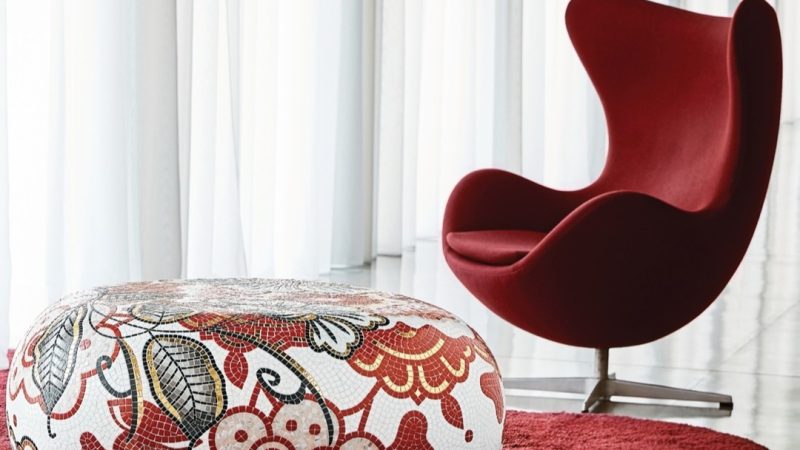
Several displays also treated comfort as a design problem rather than a decorative afterthought. Curved backs, generous upholstery and supportive forms appeared alongside more disciplined silhouettes. The best examples avoided the generic softness of lounge furniture by using proportion, texture and construction details to create a distinct identity.
There was a welcome movement away from disposable flat-pack logic, too. Emerging designers showed that flexibility does not have to mean fragility. Durable frames, replaceable covers and repairable components can extend the useful life of furniture while allowing owners to update a room without replacing everything.
Light, Technology And Human Connection
Lighting presentations revealed a quieter relationship with technology. Instead of focusing solely on smart controls or complex technical features, many young designers used technology to support atmosphere. Dimmability, portability and rechargeable operation were integrated into objects that still felt warm and tactile.
This is particularly relevant to Australian interiors, where lighting often has to work across bright daytime conditions and relaxed evening settings. A portable lamp can move from a dining table to a balcony, while layered ambient lighting can soften the transition between a living room and an outdoor entertaining area.
Digital tools also influenced the design process. Generative modelling, digital fabrication and parametric methods allowed studios to test complex geometries or minimise waste. Yet the most convincing work retained evidence of the human hand. Small variations, hand-applied finishes and craft-based details prevented the objects from feeling anonymous.
The exhibition experience itself demonstrated the importance of visual narrative. Strong displays used colour, sound, scale and movement to make products memorable. Even references to live performance culture can inform how a showroom or installation builds anticipation, guides attention and gives a collection a sense of occasion.
Signals Worth Watching
For designers, retailers and specifiers, the fair offered several directions that are likely to influence the next round of residential and commercial collections.
- Modular furniture designed for changing room layouts
- Recycled and bio-based materials with visible textures
- Portable lighting suited to layered, low-energy interiors
- Repairable products supported by clear after-sales service
The exhibition also reinforced the value of emotional character. A product does not have to be loud to stand out; an unusual edge, a thoughtful handle or a distinctive surface may be enough. Emerging studios are increasingly aware that buyers want objects with a story, especially when a piece is intended to remain in a home for many years.
For Australian practices, these ideas can be translated into projects without copying the look of a New York fair. The useful lessons are strategic: specify adaptable pieces, consider maintenance from the beginning and allow local climate and lifestyle to guide material choices.
- Check UV, moisture and heat performance before specifying imported pieces
- Ask manufacturers about replacement parts and repair services
- Consider freight, lead times and Australian warranty support
- Balance statement objects with readily available everyday products
That balance is important for hospitality and workplace projects as well. A bold chair or light can define a room, but its commercial success depends on cleaning requirements, compliance, availability and the ability to replace damaged components.
From New York To Australian Interiors
The emerging designers presented at ICFF 2025 showed an industry moving towards greater adaptability, material transparency and emotional depth. Their work was experimental without losing sight of real spaces, real bodies and real patterns of use. That combination made the fair valuable for anyone interested in the future of furniture and interior design.
Australian audiences can read these developments through a local lens. The country’s design market rewards products that cope with long distances, changing weather, compact urban homes and a strong culture of outdoor living. It also has a growing appetite for locally made furniture, independent studios and objects that bring personality to otherwise familiar interiors.
The most promising designers are likely to be those who connect originality with responsibility. Their collections will need to look distinctive in a showroom, perform reliably in homes and workplaces, and offer a credible response to questions about materials, waste and longevity.
Explore the emerging work from ICFF 2025, then look for designers and makers whose ideas can translate thoughtfully into Australian projects. Support the studios pushing furniture, lighting and materials towards a more adaptable future, and let their experiments inform the next interior you specify, furnish or create.